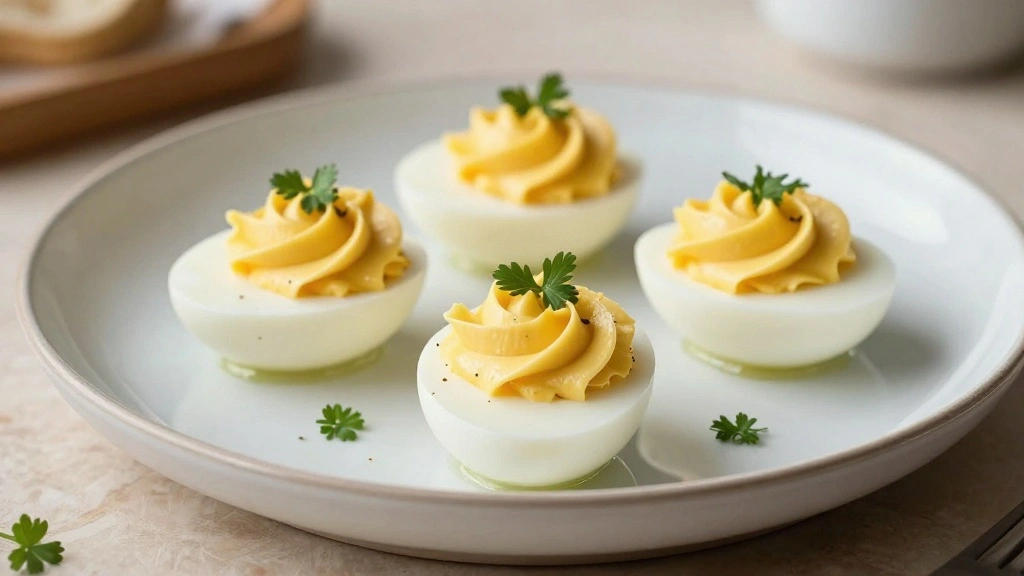
Deviled eggs are a staple at gatherings, offering a delightful burst of flavor in every bite.
With just four simple ingredients, this recipe allows the natural richness of eggs to shine through.
Perfect for Easter brunches, picnics, or any festive occasion, these eggs are both versatile and crowd-pleasing.
The creamy yolk filling, combined with tangy mustard and a sprinkle of paprika, creates a harmonious blend that’s irresistible.
Whether you’re a seasoned cook or a kitchen novice, this easy recipe is sure to impress your guests.
Get ready to enjoy a timeless appetizer that’s both quick to prepare and effortlessly delicious.
The History and Cultural Significance
• 4 Ingredient Deviled Eggs trace their origins to ancient Rome, where boiled eggs were seasoned with spicy sauces as early as 4th century A.D.
• The dish evolved over decades as mustard and mayonnaise were incorporated, eventually becoming the beloved version we know today.
• In American culture, this dish traditionally appears at Southern gatherings, symbolizing hospitality and comfort.
• While many variations exist across different regions, the authentic version maintains a creamy yolk filling that sets it apart from imitations.
Recipe Overview
Nutritional Information (per serving)
Essential Equipment Guide
Medium Saucepan: A medium saucepan is essential for boiling eggs evenly. Ensure it has a heavy bottom to prevent hotspots and an adequate size to accommodate all the eggs without overcrowding.
Slotted Spoon: This tool is crucial for gently removing eggs from boiling water without cracking them. A wide, shallow spoon is ideal, though a regular spoon can substitute in a pinch.
Piping Bag or Plastic Bag: For a professional-looking presentation, a piping bag allows for controlled and decorative yolk filling. If unavailable, a plastic bag with the corner cut off works well as an alternative.
Ingredients
For the Base
|
| Amount | Ingredient | Notes |
|---|---|---|
| 6 large | eggs | boiled and peeled |
| 3 tablespoons | mayonnaise | adds creaminess to the filling |
Seasonings
| Amount | Ingredient | Notes |
|---|---|---|
| 1 teaspoon | mustard | imparts tangy flavor |
| 1 pinch | paprika | for garnish and a hint of spice |
Preparation Methods
Perfect Boiling: Boiling eggs to perfection is key. Start with cold water and bring to a gentle boil, then let sit off the heat for 9-12 minutes for firm yolks. Cooling rapidly in an ice bath ensures easy peeling.
Yolk Mixture Creation: Achieving a smooth yolk filling involves mashing yolks thoroughly with a fork before mixing in mayonnaise and mustard. The texture should be creamy without lumps.
Piping Technique: For an elegant finish, use a piping bag to fill the egg whites. This technique ensures even distribution and an attractive presentation, with the option of using a star tip for added flair.
Step 1: Boil the Eggs

Place eggs in a medium saucepan and cover with cold water.
Bring the water to a gentle boil over medium-high heat.
Once boiling, remove the saucepan from heat and cover with a lid.
Let the eggs sit for 10 minutes to achieve firm yolks.
Step 2: Cool and Peel the Eggs

Transfer boiled eggs to a bowl filled with ice water.
Let them cool for about 5 minutes to stop the cooking process.
Gently crack the eggs and peel them under running water.
Ensure the shells are completely removed without damaging the egg whites.
Step 3: Halve the Eggs

Carefully slice each egg in half lengthwise using a sharp knife.
Place the yolks in a separate bowl, setting the whites aside.
Ensure the whites remain intact for filling later.
Use a gentle motion to avoid tearing the egg whites.
Step 4: Prepare the Filling

Mash the yolks with a fork until they are finely crumbled.
Add mayonnaise and mustard to the yolks and mix until smooth.
Continue mixing until achieving a creamy consistency.
Adjust seasoning as desired for taste.
Step 5: Fill the Egg Whites

Spoon the yolk mixture into a piping bag fitted with a tip.
Pipe the mixture into the hollow of each egg white evenly.
Ensure the filling is generous and smooth in each egg half.
Wipe any excess from the edges for a clean finish.
Step 6: Garnish the Eggs

Lightly sprinkle paprika over the filled eggs for color.
Optionally, add a sprig of fresh parsley for garnish.
Consider adding a dash of freshly ground pepper for extra flavor.
Ensure garnishes are evenly distributed for visual appeal.
Step 7: Chill Before Serving

Cover the deviled eggs with plastic wrap.
Refrigerate for at least 30 minutes to meld flavors.
This chilling step enhances the texture and taste.
Remove from fridge just before serving to maintain freshness.
Step 8: Serve and Enjoy

Arrange the deviled eggs on a serving platter.
Serve chilled for the best taste and texture.
Enjoy as an appetizer or part of a buffet spread.
Pair with a variety of other hors d'oeuvres for a complete experience.
Critical Timing and Temperature Guide
Boiling Eggs: Simmer eggs for exactly 9-12 minutes for firm yolks. Look for slightly opaque whites and solid yolks. Avoid overcooking to prevent greenish yolk edges.
Cooling Eggs: Cool eggs in an ice bath for at least 5 minutes. The ice bath stops the cooking process, making peeling easier. Neglecting this can result in overcooked yolks.
Chilling Filled Eggs: Chill filled eggs for at least 30 minutes for optimal flavor. The filling firms up slightly, enhancing texture. Serving warm may result in softer filling.
Pro Tips for 4 Ingredient Deviled
• Ingredient Selection: Choose fresh, large eggs for the best flavor and texture. The quality of mayonnaise significantly affects the creaminess of the filling.
• Preparation Secret: Try adding a pinch of salt to the boiling water to help loosen the egg shells, making them easier to peel.
• Temperature Management: Let eggs reach room temperature before boiling to prevent cracking and ensure even cooking.
• Texture Enhancement: For extra smooth yolk filling, press the yolks through a fine-mesh sieve before mixing.
• Flavor Layering: Incorporate a dash of white vinegar or lemon juice to enhance the tanginess of the mustard.
• Make-Ahead Strategies: Prepare the eggs and filling a day in advance, storing them separately. Fill and garnish just before serving.
• Restaurant-Quality Finishing Touches: Use a star tip for piping the yolk mixture to create an elegant, professional look.
• Equipment Optimization: If a piping bag isn’t available, use a freezer bag with a small corner cut off for similar results.
Troubleshooting Common Issues
• Eggs Difficult to Peel: Fresh eggs are harder to peel; use older eggs. If shells stick, run cold water over the eggs while peeling.
• Filling Too Runny: If the filling is too thin, add more yolks or reduce mayonnaise. Ensure eggs are cooled properly before mashing.
• Yolk Filling Not Smooth: Lumps in the filling can be avoided by mashing yolks thoroughly or using a sieve for finer texture.
• Egg Halves Falling Over: Slice a small piece off the bottom of each egg white to create a flat base for stability.
• Flavors Unbalanced: Adjust seasonings by adding more mustard for tang or more mayonnaise for creaminess until the desired balance is achieved.
Variations and Regional Differences
• Southern Style: Incorporates sweet pickle relish and a touch of hot sauce for a classic Southern twist, adding sweetness and heat.
• European Influence: Uses crème fraiche and Dijon mustard, offering a rich and tangy flavor profile distinct from American versions.
• Asian Fusion: Adds soy sauce and wasabi to the filling, providing a unique umami kick and a hint of spice.
• Mexican Twist: Includes avocado and lime juice in the filling for a creamy texture and zesty flavor, topped with cilantro.
Food Science Behind the Recipe
• Protein Coagulation: Boiling eggs causes proteins to denature and coagulate, forming a firm structure. Understanding the right temperature prevents overcooked eggs.
• Emulsification: The combination of mayonnaise and mustard creates an emulsion, giving the filling its creamy texture. Proper mixing is key to achieving a stable emulsion.
• Flavor Chemistry: Paprika and mustard add depth through their volatile compounds, which release aroma and enhance taste when combined with rich egg yolks.
Frequently Asked Questions
What's the most common mistake people make when preparing deviled eggs? Overcooking the eggs is a frequent issue, leading to rubbery whites and greenish yolks.
Can I substitute mayonnaise with something else? Yes, Greek yogurt or sour cream can be used for a lighter version, though it may alter the flavor slightly.
How can I make deviled eggs more spicy? Add hot sauce or cayenne pepper to the yolk mixture for an added kick.
What's the best way to store deviled eggs? Store them in an airtight container in the refrigerator for up to two days for freshness.
Why are my deviled eggs watery? This could be due to excess moisture from the mayonnaise or undercooked yolks not absorbing the liquid.
Can deviled eggs be frozen? It's not recommended, as freezing alters the texture of the eggs and filling.
How do I prevent the yolk mixture from being too dry? Add a bit more mayonnaise or a teaspoon of water to reach the desired consistency.
Serving and Presentation Guide
• Traditional Presentation: Serve on a classic egg platter with a touch of paprika and parsley for garnish, maintaining simplicity and elegance.
• Modern Twist: Arrange on a slate board with microgreens and edible flowers for a contemporary and vibrant look.
• Buffet Setting: Use tiered stands to display deviled eggs at different heights, adding visual interest to a buffet.
• Individual Servings: Place each egg half in a small decorative cup or spoon for an upscale, individual presentation.
Conclusion

Deviled eggs are a timeless classic that never fails to delight.
With just four ingredients, you can create a dish that's both simple and sophisticated.
Whether you're hosting a party or enjoying a casual snack, this recipe is a winner.
Give it a try and enjoy the compliments from your delighted guests.