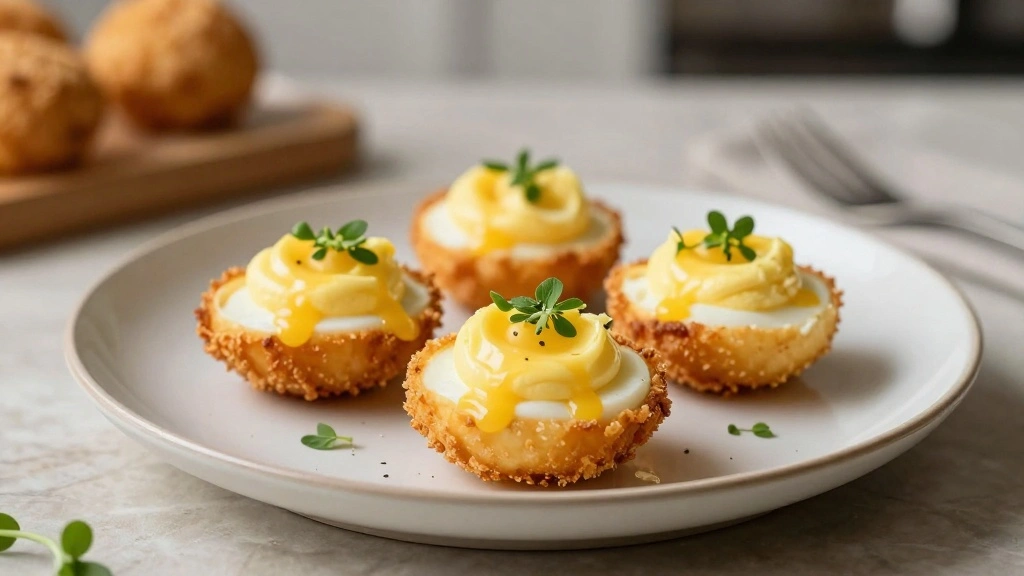
Fried Deviled Eggs are a delightful twist on a classic appetizer, combining a crispy outer layer with a creamy, flavorful filling.
The contrast between the crunchy exterior and the smooth, seasoned yolk mixture creates a unique textural experience that is simply irresistible.
I first encountered these tempting bites at a summer picnic, where their popularity was evident as they quickly disappeared from the platter.
This recipe is perfect for those looking to add a little extra flair to their party offerings or family gatherings.
With straightforward steps and easily accessible ingredients, you can recreate this crowd-pleaser in your own kitchen.
Whether you’re a deviled egg aficionado or trying them for the first time, this version is sure to impress.
The History and Cultural Significance
• Fried Deviled Eggs traces its origins to Southern United States, where it was originally created by inventive home cooks looking to add a twist to traditional deviled eggs.
• The dish evolved over decades as frying techniques became more accessible, eventually becoming the beloved version we know today.
• In Southern culture, this dish traditionally appears at picnics and family gatherings, symbolizing hospitality and culinary creativity.
• While many variations exist across different regions, the authentic version maintains a perfect balance of crispiness and creaminess that sets it apart from imitations.
Recipe Overview
Nutritional Information (per serving)
Essential Equipment Guide
Deep Fryer or Heavy Pot: A deep fryer or a heavy pot is essential for achieving the perfect crunchy exterior of the fried deviled eggs. An alternative could be a large skillet with deep sides. When selecting, ensure it can maintain a consistent temperature for even frying.
Slotted Spoon: A slotted spoon is crucial for safely removing the eggs from hot oil, allowing excess oil to drain away. A spider strainer can also be effective. Look for one with a long handle for safety.
Piping Bag: Using a piping bag allows for precise and neat filling of the egg whites with the yolk mixture. A plastic sandwich bag with a corner cut off can work as an alternative. Choose a piping bag with a star tip for a decorative finish.
Ingredients
For the Base
|
| Amount | Ingredient | Notes |
|---|---|---|
| 6 large | eggs | hard-boiled and peeled |
| 1 cup | breadcrumbs | for coating |
| 1 cup | all-purpose flour | for dredging |
| 2 cups | vegetable oil | for frying |
For the Filling
| Amount | Ingredient | Notes |
|---|---|---|
| 1/4 cup | mayonnaise | adds creaminess |
| 1 tablespoon | Dijon mustard | adds tanginess |
| 1 teaspoon | white vinegar | brightens the filling |
| 1/4 teaspoon | paprika | for flavor and garnish |
Seasonings
| Amount | Ingredient | Notes |
|---|---|---|
| 1/2 teaspoon | salt | enhances flavor |
| 1/4 teaspoon | black pepper | adds mild heat |
Preparation Methods
Hard-Boiling Eggs: Hard-boiling eggs is a straightforward process, but achieving the perfect texture is key for this recipe. Place eggs in a pot of cold water, bring to a boil, then remove from heat and cover for 9-12 minutes. This technique ensures firm whites and a well-cooked yolk without a greenish tint.
Breading Technique: For the breading, follow a three-step process: dredge in flour, dip in beaten egg, then coat with breadcrumbs. This layering creates a crispy shell. Ensure each step is evenly applied for the best results.
Frying: Frying is done at a consistent temperature of 350°F. This ensures the eggs cook evenly and the coating turns golden brown. Use a thermometer to monitor oil temperature closely to avoid burning or undercooking.
Step 1: Prepare Eggs

Place eggs in a pot and cover with water.
Bring water to a boil over medium-high heat.
Once boiling, remove from heat and cover.
Let sit for 9-12 minutes, then transfer eggs to an ice bath.
Step 2: Peel and Halve Eggs

Once cooled, gently peel the eggs under running water.
Slice each egg in half lengthwise.
Carefully remove yolks and place into a mixing bowl.
Set egg whites aside on a plate.
Step 3: Prepare the Filling

Mash the egg yolks with a fork until smooth.
Add mayonnaise, Dijon mustard, vinegar, salt, and pepper to the yolks.
Mix until creamy and well combined.
Taste and adjust seasoning as needed.
Step 4: Fill Egg Whites

Spoon yolk mixture into a piping bag fitted with a star tip.
Pipe the filling into each egg white half.
Ensure filling is evenly distributed and slightly mounded.
Set filled eggs aside while preparing coating.
Step 5: Prepare Breading Station

Set up three shallow bowls: one with flour, one with beaten eggs, and one with breadcrumbs.
Dredge each filled egg half in flour, shaking off excess.
Dip into beaten eggs, ensuring full coverage.
Coat with breadcrumbs, pressing gently to adhere.
Step 6: Heat Oil

Pour vegetable oil into a deep fryer or heavy pot.
Heat oil to 350°F, monitoring with a thermometer.
Ensure oil is deep enough to fully submerge eggs.
Maintain temperature to ensure even frying.
Step 7: Fry Eggs

Carefully lower breaded eggs into hot oil using a slotted spoon.
Fry in batches to avoid overcrowding.
Cook until golden brown, about 2-3 minutes.
Remove and drain on paper towels.
Step 8: Garnish and Serve
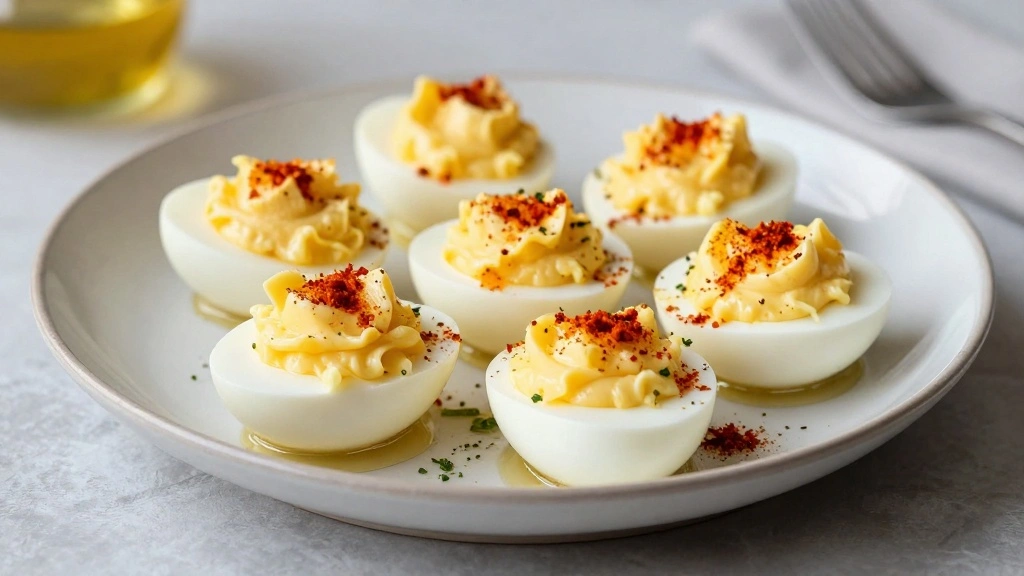
Sprinkle fried eggs with paprika for garnish.
Arrange on a serving platter for presentation.
Serve immediately for best texture and flavor.
Optionally, garnish with fresh herbs for added color.
Critical Timing and Temperature Guide
Boiling Eggs: Boil eggs for exactly 9-12 minutes, then transfer to an ice bath. Look for firm whites and fully cooked yolks. Avoid overcooking to prevent greenish yolk color.
Oil Temperature for Frying: Maintain oil temperature at 350°F for optimal frying. A consistent temperature ensures even cooking and a crispy coating. Avoid overheating oil to prevent burning.
Frying Time: Fry each egg for 2-3 minutes until golden brown. Visually check for even browning. Avoid overcrowding the fryer, which drops oil temperature and leads to soggy coating.
Pro Tips for Fried Deviled Eggs
• Ingredient Selection: Choose the freshest eggs possible, as they peel more easily and have better flavor. High-quality Dijon mustard enhances the filling's tanginess.
• Preparation Secret: Chill eggs in an ice bath immediately after boiling to stop cooking and make peeling easier.
• Temperature Management: Keep the oil at a steady 350°F to ensure crispiness without burning.
• Texture Enhancement: Use panko breadcrumbs for a lighter, airier crunch.
• Flavor Layering: Add a pinch of cayenne pepper to the filling for a subtle heat that complements the creamy yolks.
• Make-Ahead Strategies: Prepare the filling and store separately from the whites, filling just before serving to maintain texture.
• Restaurant-Quality Finishing Touches: Garnish with a sprinkle of smoked paprika for a touch of color and flavor.
• Equipment Optimization: Use a thermometer to monitor oil temperature precisely, ensuring consistent results.
Troubleshooting Common Issues
• Eggs Overcooked: Overcooked eggs have a greenish tint around the yolk. Reduce boiling time and use an ice bath immediately after cooking.
• Soggy Coating: Soggy coating results from overcrowding the fryer or incorrect oil temperature. Fry in small batches at the right temperature.
• Filling Lacks Flavor: If the filling is bland, adjust seasoning with more salt, mustard, or vinegar to enhance flavor.
• Uneven Frying: Uneven frying occurs if oil temperature fluctuates. Monitor and adjust heat as needed to maintain consistency.
• Eggs Fall Apart: Eggs may fall apart if handled roughly. Use a gentle touch when filling and breading to preserve their shape.
Variations and Regional Differences
• Southern Style: This version often includes spicy ingredients like hot sauce or cayenne pepper in the filling for added heat.
• Asian-Inspired: Incorporate soy sauce and sesame oil into the filling and use panko breadcrumbs for a lighter coating.
• Italian Twist: Add Parmesan cheese and basil to the filling for a Mediterranean flair, and use Italian breadcrumbs for coating.
• Mexican Fusion: Mix in avocado and lime juice into the filling and garnish with cilantro and jalapeño slices for a zesty variation.
Food Science Behind the Recipe
• Maillard Reaction: This chemical reaction occurs when frying, giving the eggs their golden brown color and rich flavor.
• Emulsification: The mayonnaise emulsifies the yolk mixture, creating a smooth, creamy texture in the filling.
• Protein Coagulation: Boiling eggs causes proteins to coagulate, creating firm whites and yolks. Proper control of this process ensures ideal texture.
Frequently Asked Questions
What's the most common mistake people make when preparing Fried Deviled Eggs? The most common mistake is not maintaining the correct oil temperature, leading to uneven cooking or soggy coating.
How can I make the eggs easier to peel? Use older eggs and an ice bath after boiling to make peeling easier and prevent tearing.
Can I prepare any components in advance? Yes, you can prepare the yolk filling in advance and store it separately, filling the eggs just before serving.
What type of breadcrumbs should I use? Panko breadcrumbs are recommended for a lighter, crispier coating.
How do I prevent the filling from being too runny? Adjust the mayonnaise quantity and ensure the yolks are fully mashed and combined with other ingredients.
Why did my eggs crack during boiling? Cracking can occur if eggs are added to boiling water. Start with cold water to avoid this issue.
How can I add more flavor to the filling? Experiment with additional seasonings like cayenne pepper, garlic powder, or herbs to enhance flavor.
Serving and Presentation Guide
• Traditional Presentation: Serve the fried deviled eggs on a large platter, garnished with fresh herbs and a sprinkle of paprika for color.
• Modern Presentation: Arrange eggs in individual serving dishes with microgreens for a contemporary touch.
• Rustic Presentation: Present on a wooden board with complementary sides like pickles and olives for a rustic look.
• Elevated Presentation: Use a tiered serving tray to display eggs for a buffet or party setting, adding visual interest.
Conclusion
This Fried Deviled Eggs recipe offers a delightful twist on a beloved classic with its crispy exterior and creamy filling.
Perfect for any occasion, these eggs are sure to be a hit with family and friends alike.
Don't hesitate to experiment with variations and make this recipe your own.
So gather your ingredients, follow the steps, and enjoy this delicious appetizer.